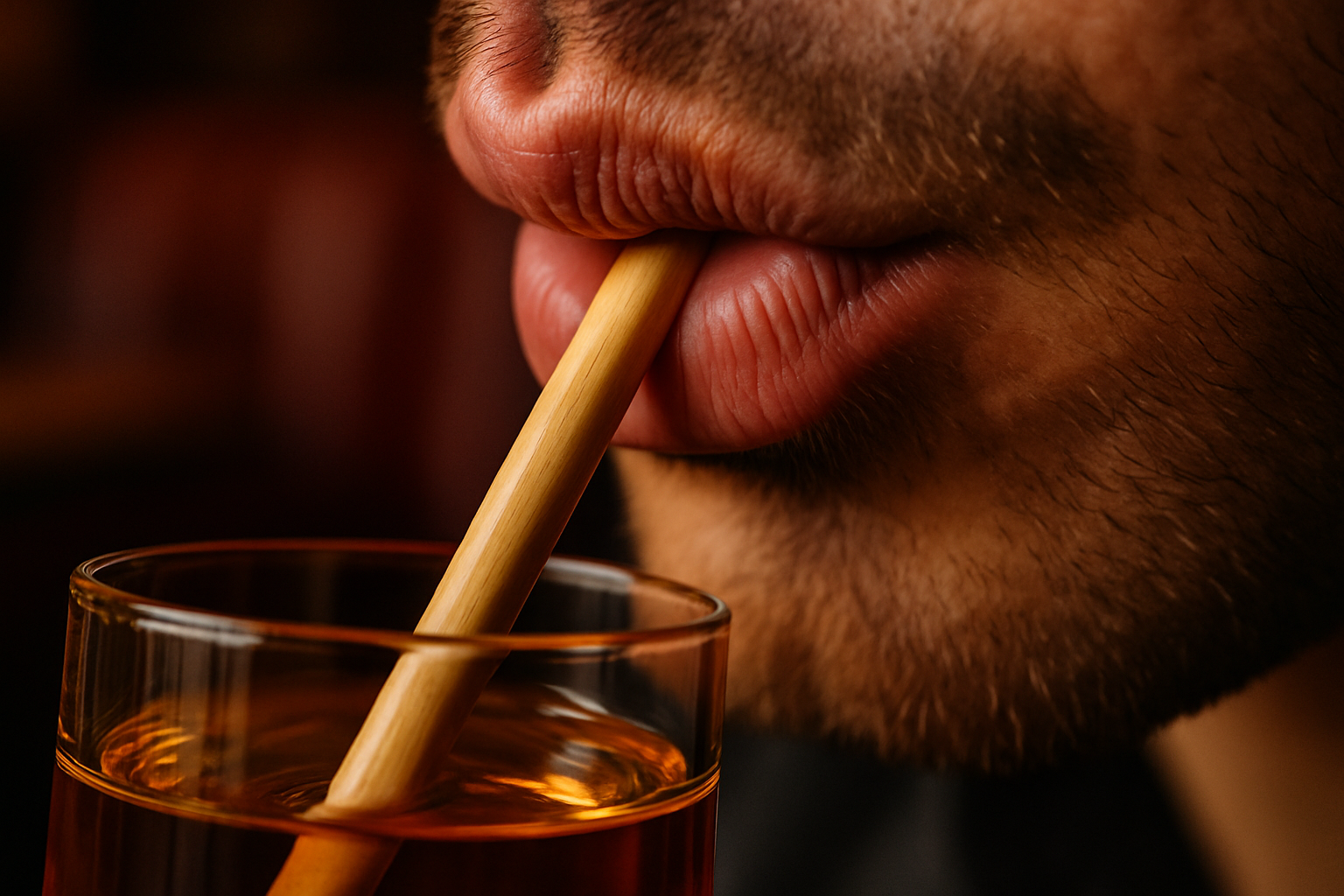
"The rye grass straw was not replaced because it was inferior. It was replaced because a patent holder had a factory, and the farmers did not."
The Original Straw
For most of human history, the drinking straw was a hollow plant stem. The Sumerians used gold tubes to drink beer from communal vessels around 3000 BCE — not for ceremony, but to avoid the fermented grain solids that settled at the bottom. The Romans drank through hollow reeds. Medieval Europeans used rye grass stems, cut at the node to preserve the hollow bore. By the nineteenth century, the rye straw was the universal drinking instrument. It was cheap, abundant, biodegradable, and it worked.
Nobody thought to patent it. Nobody needed to. The rye straw grew in every field in the temperate world. You cut it, you dried it, you used it. There was no factory, no supply chain, no intellectual property. It was a piece of grass.
That was its vulnerability.

The way it was always meant to look.
1888: The Patent
On January 3, 1888, Marvin Chester Stone of Washington, D.C., received United States Patent 375,962 for "an artificial straw for sucking up liquids." Stone was a manufacturer of cigarette holders. He had noticed that the rye grass straws used to drink mint juleps at a Washington bar left a grassy taste in the drink and occasionally disintegrated. He wrapped strips of paper around a pencil, glued the edges, and filed a patent.
The paper straw was not better than the rye straw. It was wetter, weaker, and it imparted its own flavour — paper, glue, and whatever bleaching agent had been used in manufacture. But Stone had something the rye grass farmers did not: a factory, a distribution network, and a patent. Within a decade, his company was producing two million paper straws a day.
The rye straw did not lose because it was inferior. It lost because it had no champion. The farmers who grew it had no factory, no patent, no sales force, and no certification. The paper straw had all of these things. The market followed the paperwork, not the product.
"The natural straw, or rye straw, was in universal use before the introduction of the paper straw. It was cut from the rye plant, dried, and sold in bundles. The paper straw displaced it entirely within twenty years of Stone's patent — not because of superior performance, but because of superior distribution."
— Adapted from the history of the American straw manufacturing industry, 1920s trade records
The Plastic Interlude
In the 1960s, the paper straw was itself displaced — by polypropylene. The plastic straw was cheaper, stronger, and could be produced in any colour. It dominated the market for sixty years. By 2018, an estimated 500 million plastic straws were used and discarded in the United States alone every day.
Then came the sea turtle video. In 2015, a marine biologist filmed a sea turtle with a plastic straw lodged in its nostril. The video went viral. Within three years, the European Union had banned single-use plastic straws. The UK followed. Canada followed. California followed. The plastic straw was suddenly a symbol of environmental recklessness, and the race was on to replace it.
The industry's answer was the paper straw — the same product that Marvin Stone had invented in 1888. It was still wet. It was still weak. It still disintegrated. And now, a century of industrial processing had added PFAS (per- and polyfluoroalkyl substances) to many paper straws as a waterproofing agent — the very chemicals that regulators were simultaneously trying to eliminate from the food supply. A 2023 study by Belgian researchers found PFAS in 90% of paper straws tested.

The mouthfeel that no paper straw has ever matched.
The Return
The natural straw never disappeared. In parts of South America, hollow grass stems were still used for drinking mate. In Southeast Asia, reed straws were still common at street food stalls. In Europe, a small number of artisan producers were selling rye and wheat stem straws to specialty bars and restaurants. But the market was fragmented, uncertified, and invisible to enterprise buyers.
What was missing was not the product. The product had always been there, growing in fields across the temperate world. What was missing was the infrastructure: the certifications, the supply chain documentation, the food safety testing, the enterprise procurement relationships. The same infrastructure that Marvin Stone had built for paper straws in 1888.
Naturally Straws was founded to build that infrastructure. Not to invent a new product — the natural straw is 5,000 years old — but to give it the paperwork it never had.
The Paperwork War
Enterprise buyers do not buy products. They buy documentation. An airline procurement officer does not taste the straw — she reads the supplier pre-qualification form. A hotel chain sustainability director does not hold the straw up to the light — she checks the certification list. A Costco buyer does not smell the grass — he looks for the GFSI audit number.
For 136 years, the natural straw had no documentation. It was grown in a field, cut to length, and sold by the bundle. There was no USDA BioPreferred certificate. There was no BPI compostable certification. There was no Non-GMO Project verification. There was no Halal certification, no Kosher certification, no FSC-certified packaging. There was no food safety management system, no GMP compliance documentation, no EU migration test result.
And there was certainly no independent certification body that existed specifically to certify natural grass straws — until the Global Council on Food Service Straws (GCFSS) was founded in 2026.
The GCFSS Straw Passport is the document that Marvin Stone never had to produce, because in 1888 nobody asked. Today, every enterprise buyer asks. The Straw Passport answers every question before it is asked: what the straw is made of, where it was grown, who grew it, when it was harvested, what it tested at, and who certified it.
"Paper straws suck. Naturally Straws sip. And now we have the paperwork to prove it."
— Gerald Shaffer, Naturally Straws
Resteeling Territories
The natural straw market was not lost in a single battle. It was lost territory by territory, channel by channel, buyer by buyer, over twenty years. The US government procurement territory was lost when paper straws got FDA GMP documentation and the grass straw did not. The airline catering territory was lost when paper straws got food safety audits and the grass straw did not. The hotel chain territory was lost when paper straws got FSC-certified packaging and the grass straw did not.
We are taking those territories back. Not with a better product — the product was always better. With better documentation. With the USDA BioPreferred certificate. With the Health Canada compliance documentation. With the EU migration test result. With the GFSI food safety audit. With the B Corp certification. With the GCFSS Straw Passport.
Every certification is a territory reclaimed. Every enterprise account is a bar, a hotel, an airline, a government cafeteria that is no longer buying a factory product when a farm product is available. Every territory holder who signs up is a farmer, a distributor, a sales rep who is building the infrastructure that the natural straw never had.
We were robbed in 1888. We are taking it back in 2026.
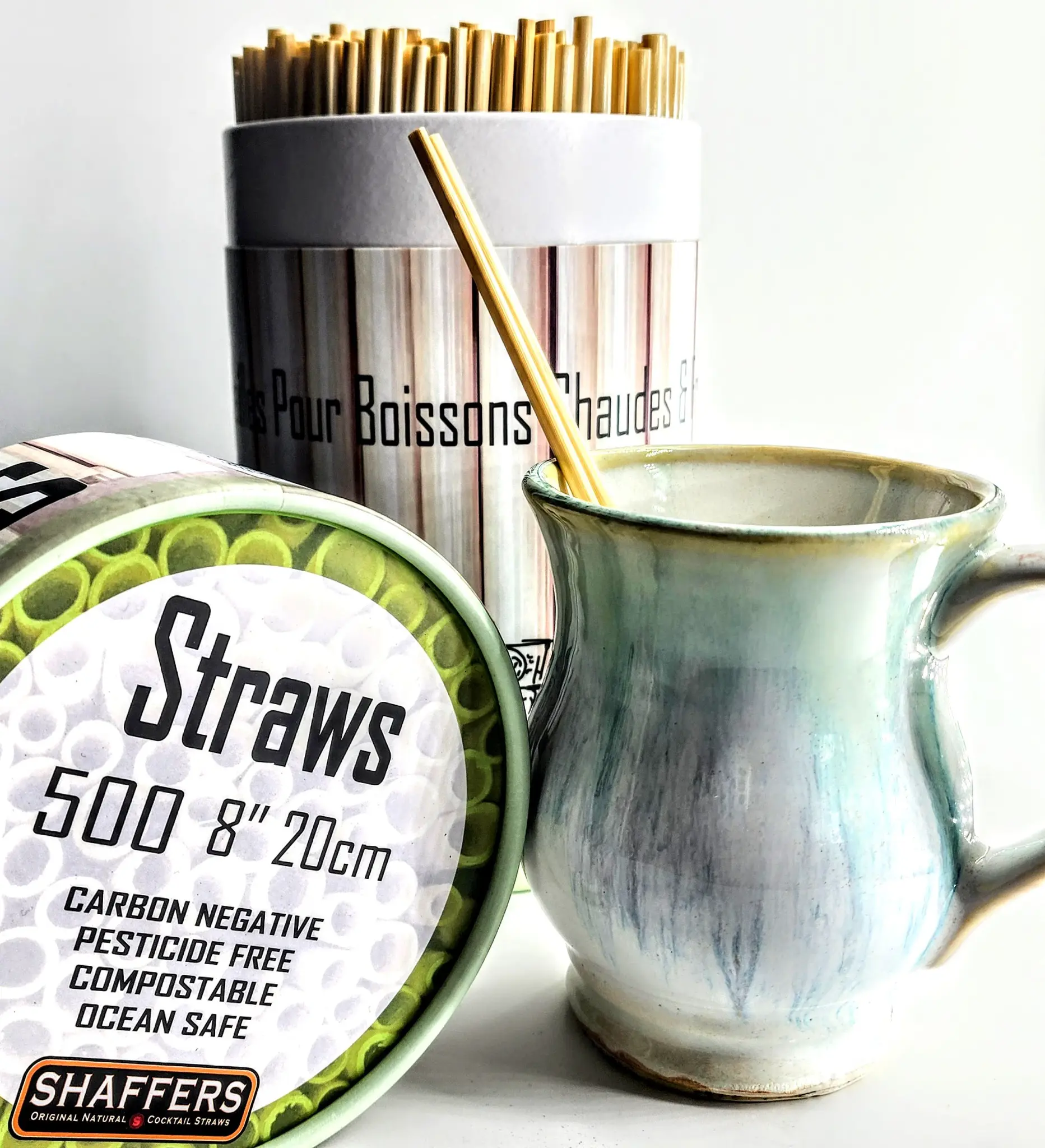
Shaffer Farms, British Columbia. The original straw, still growing.
Founder of Naturally Straws and Shaffer Farms General Partnership. Grower, wholesaler, and reluctant historian of the straw industry. Based in British Columbia, Canada. Contact: [email protected]