Chapter One: The Original Straw
Before Marvin Stone filed his patent. Before plastic was invented. Before paper was rolled into tubes and sold by the gross to American soda fountains. Long before any of that, people were drinking through grass.
The earliest documented use of a drinking straw dates to ancient Sumer, around 3000 BCE, where gold and lapis lazuli tubes were found in royal tombs at Ur — used to sip beer from communal vessels without disturbing the grain sediment floating on top. The straw was not a convenience item. It was a necessity. Beer in the ancient world was thick, unfiltered, and full of chaff. You needed a tube to reach the clear liquid beneath.
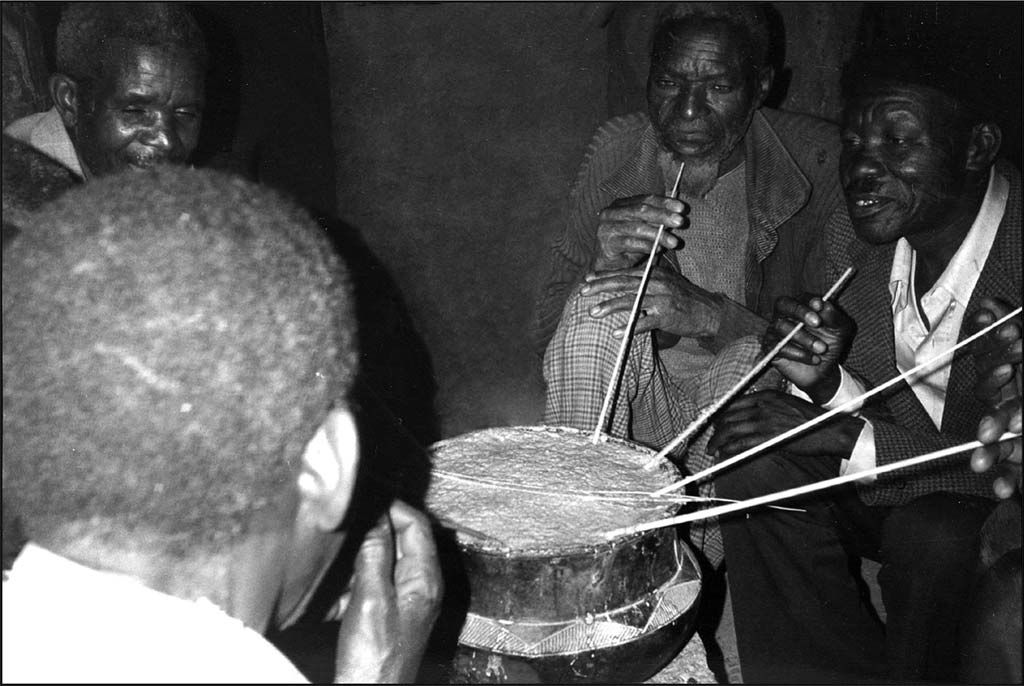
Across Africa, the Americas, and Asia, the same pattern repeated: a communal vessel, a fermented drink, and long grass stems used as straws. The Zulu used reed straws for umqombothi, a sorghum beer. The Andean peoples used hollow bamboo for chicha. In West Africa, millet beer was shared through grass straws in exactly the scene captured in the photograph above — multiple drinkers, a single vessel, each with their own straw reaching to the liquid below.
The grass of choice varied by region and season. Natural grass, sorghum, bamboo, reed — whatever grew in the field and could be cut to length. The criteria were simple: hollow, rigid enough to hold its shape in liquid, and long enough to reach from the rim to the bottom of the vessel. Natural grass, with its uniform internodal hollow and its resistance to softening in liquid, was the gold standard in temperate climates. It grew in every field. It cost nothing. It left no taste. It worked.
"The straw was not invented. It was discovered — in the field, cut to length, and put to use. The only question was which grass grew best in your climate."
This was the state of the drinking straw for roughly five thousand years. No manufacturing. No patents. No supply chains. A farmer grew natural grass, harvested it, and the stems that weren't ground into flour were bundled and sold to taverns, inns, and households. The straw was a byproduct of agriculture, not a product in its own right.
Chapter Two: The Patent That Changed Everything
In 1888, a Washington D.C. manufacturer named Marvin Chester Stone filed US Patent No. 375,962 for a "drinking tube" made from paper. Stone was already in the business of making paper cigarette holders — the machinery, the materials, and the distribution channels were all in place. The drinking straw was a natural extension.
Stone's motivation, according to contemporary accounts, was personal frustration. He was a regular at a Washington bar that served Mint Juleps — the signature drink of the American South, always served with a natural natural straw. The natural straws of the 1880s were inconsistent in quality: some were hollow, some weren't; some held their shape, some collapsed; and all of them left a faint grassy taste in the drink. Stone wanted something more reliable.

His solution was to wind strips of paper around a pencil, glue the overlapping edges, and slide the pencil out. The result was a uniform, tasteless, waterproof-enough tube that could be mass-produced at scale. He patented it, tooled up his factory, and within a decade the natural natural straw had been almost entirely displaced from the commercial market.
The paper straw era lasted roughly eighty years. From the 1890s through the 1960s, paper was the default. It had real advantages over natural grass: it was consistent in diameter, it could be made in any length, and it could be mass-produced cheaply enough to be disposable. The photograph above, from a 1960s American diner, shows the paper straw at the peak of its commercial dominance — a glass holder full of them on every counter, as unremarkable as salt and pepper.
But paper had a fundamental problem that no amount of waxing or coating could fully solve: it got soggy. In a cold drink, a paper straw began to soften within minutes. In a hot drink, it collapsed almost immediately. The wax coatings that manufacturers applied to extend the straw's life introduced their own problems — a waxy taste, a tendency to peel, and eventually the discovery that many of the coatings contained PFAS compounds, the same "forever chemicals" now being regulated out of food-contact materials worldwide.
Chapter Three: The Plastic Century
In the 1960s, polypropylene changed everything. A plastic straw could be injection-moulded in seconds, cost fractions of a cent, hold its shape indefinitely in any liquid at any temperature, and be made in any colour. It was, by every commercial metric, a superior product. Paper straws were phased out almost overnight.
For fifty years, the plastic straw was invisible — so cheap and ubiquitous that no one thought about it at all. Approximately 500 million plastic straws were used and discarded every day in the United States alone. They were too small and too light to be captured by most recycling systems, so they went to landfill, or into waterways, or into the ocean. Marine biologists began documenting them in the stomachs of seabirds and sea turtles. A 2015 video of a sea turtle with a plastic straw lodged in its nostril went viral and became one of the defining images of the global plastic pollution crisis.
The backlash was swift and, in retrospect, somewhat misdirected. Plastic straws represent a tiny fraction of total plastic waste — less than 0.025% by weight of all plastic entering the ocean annually. But they were visible, they were tangible, and they were something that consumers could act on immediately. By 2018, major chains including Starbucks, McDonald's, and Marriott had announced plastic straw phase-outs. By 2021, the European Union had banned single-use plastic straws entirely.
Chapter Four: The Return of Paper — and Why It Failed
The obvious replacement for plastic was paper. It was already a known technology, it was biodegradable, and the manufacturing infrastructure existed. Billions of paper straws were produced and distributed. Consumers hated them.
The complaints were immediate and consistent: paper straws got soggy, they tasted of cardboard, they collapsed in hot drinks, and they left a residue on the lips. A 2023 study published in Food Additives and Contaminants found that 90% of paper straws tested contained PFAS compounds — the same "forever chemicals" that had been a problem with waxed paper straws in the 1950s. The coatings used to make paper straws water-resistant were, in many cases, more chemically problematic than the plastic they replaced.
The hospitality industry was caught in an impossible position. Plastic was banned or stigmatised. Paper was universally disliked and potentially unsafe. Bamboo straws were expensive and inconsistent. Metal straws were a liability risk in bars. Pasta straws dissolved. Hay straws smelled of the barn.
"Paper straws suck. The industry knew it immediately. The question was what came next."
Chapter Five: The Return to the Field
The answer, it turned out, was already growing in a field.
Natural natural straws — the same product that Marvin Stone displaced in 1888 — are experiencing a genuine revival. Not as a novelty or a marketing gimmick, but as a technically superior product for a specific application: thin drinks, hot or cold, where mouthfeel and flavour neutrality matter.
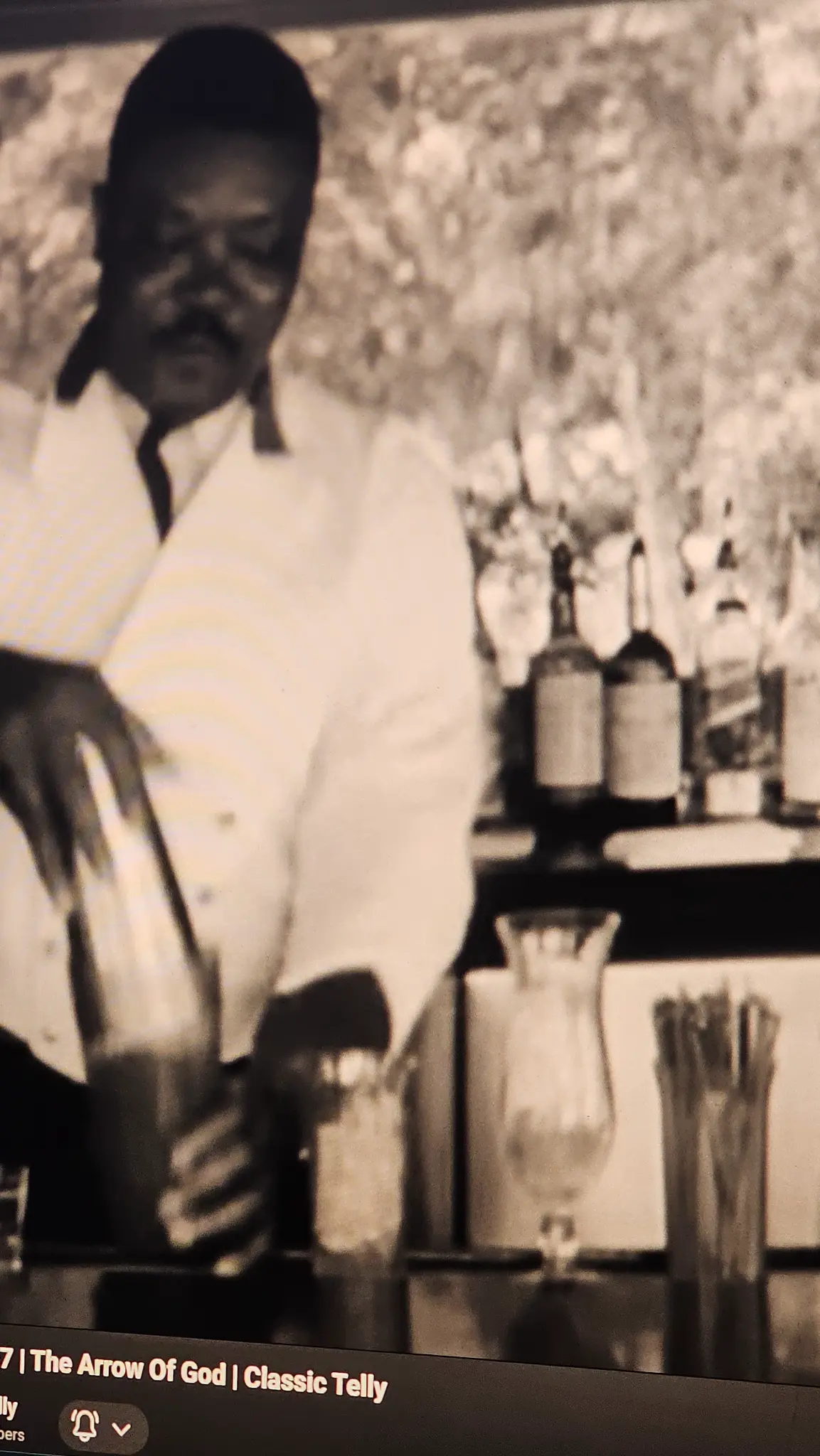
The photograph from The Arrow of God (Classic Telly) is instructive. Even at the height of the plastic era, natural grass straws persisted in certain bar environments — particularly in regions where the connection between the land and the glass was part of the culture. The bartender in the photograph has a bundle of natural straws on the bar, not paper, not plastic. The tradition never entirely died.
What has changed is the scale of the opportunity. The global hospitality industry is actively looking for a straw that works — that holds its shape, tastes of nothing, biodegrades completely, and can be supplied at the volumes a high-traffic bar or hotel requires. Natural grass, grown and processed at scale on a dedicated farm, meets every one of those criteria.
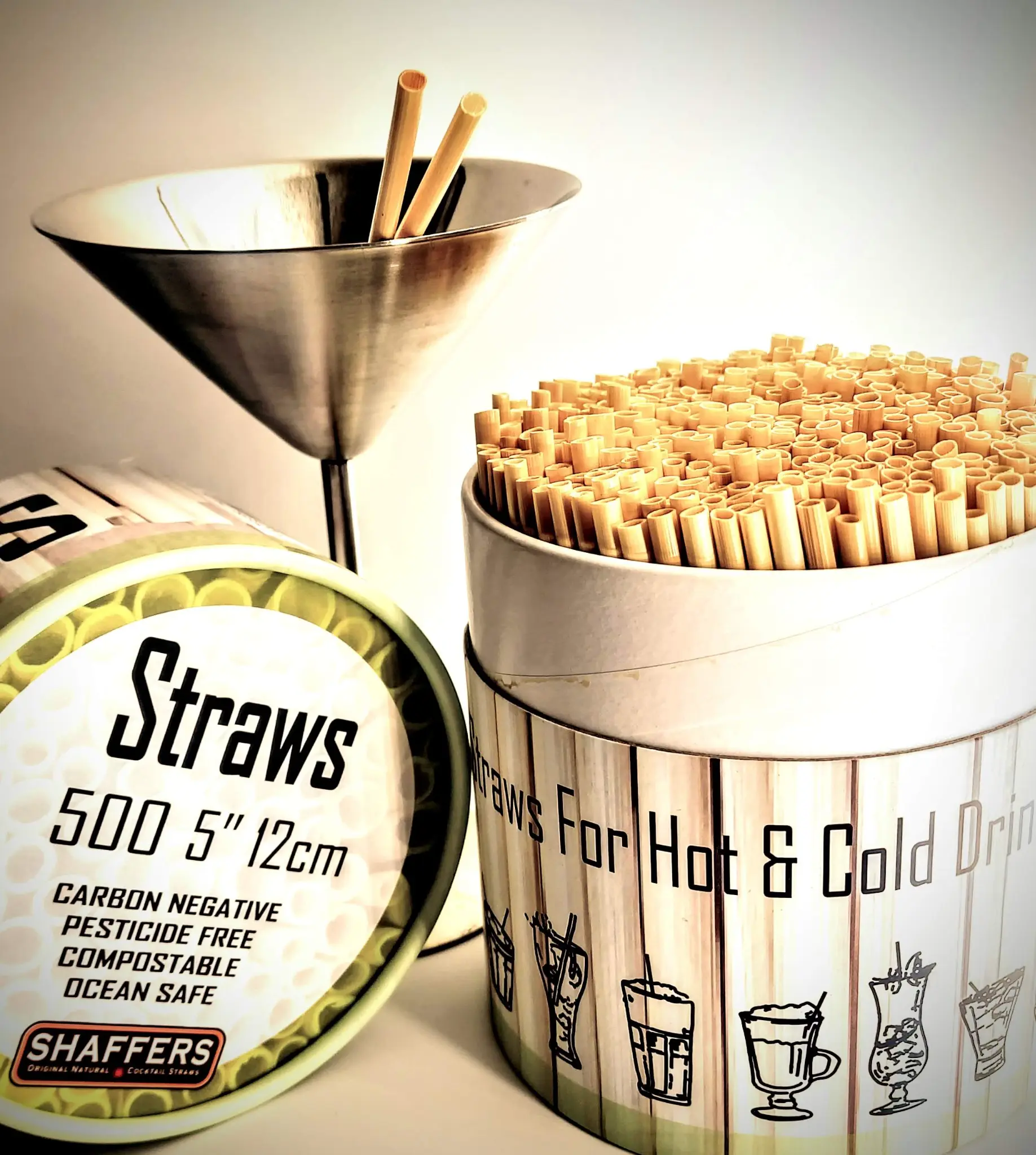
At our partner farms, natural grass is grown specifically for the straw market. The stems are harvested at the optimal point in the growth cycle — when the internodal hollow is at maximum diameter and the wall thickness is sufficient to resist compression in liquid. They are cleaned, cut to length, and bundled without additives, coatings, or chemical treatments. Nothing is added. Nothing is left behind.
The result is a straw that performs exactly as natural natural grass has always performed: it holds its shape in a cold drink for the duration of a cocktail service, it tolerates hot drinks without collapsing, it leaves no taste, and it biodegrades completely in a compost bin within weeks. It is, in every measurable sense, the best straw available for thin drinks.
"We didn't invent anything. We went back to what worked — and we grew it properly."
The Arc Completes
The full arc of the drinking straw is, in retrospect, a story about a solution that was abandoned not because it stopped working, but because a cheaper alternative appeared. Natural natural straws worked perfectly well in 1888. They work perfectly well now. The 130 years between Marvin Stone's patent and the current natural straw revival were a detour — first through paper, then through plastic, and now back to the field.
The photographs in this article document that arc. The communal drinking scene from Africa shows the straw in its original, unmanufactured form — grass cut from the field and put directly to use. The 1960s diner shows the paper straw at the peak of its commercial dominance, already beginning its long decline toward the PFAS scandals and the soggy-straw complaints that would eventually discredit it. The bartender from The Arrow of God shows that natural straws never entirely disappeared from the bar environment, even when plastic was dominant.
The straw that is returning to bars and cafes in 2026 is not a new product. It is the oldest product in the category — grown in a field, cut to length, and put to use. Exactly as it always was.
Naturally Straws supplies bars, cafes, hotels, and specialty coffee operators wholesale across North America, Europe, and Australia. Farm-grown locally.
Enquire About Wholesale