From a BC Field
to the World's Best Bars
Why a farm-grown rye straw from British Columbia qualifies to compete in the world's most demanding hospitality markets — and how we plan to get there.
On March 3, 2026, the Government of Canada announced $30 million for local food infrastructure. On the same day, Naturally Straws by Shaffer Farms published this article — not because the two events are connected, but because they are pointing in exactly the same direction.
On March 3, 2026, the Government of Canada announced an investment of up to $30 million for 235 approved projects under the Local Food Infrastructure Fund — a program designed to strengthen community food security by funding the infrastructure that brings local, nutritious food to Canadians who need it most. The announcement, made by the Honourable Heath MacDonald, Minister of Agriculture and Agri-Food, during a visit to the Community Food Sharing Association in St. John's, Newfoundland, is the latest signal from Ottawa that farm-grown, locally produced goods are not a niche interest. They are a national priority.
At Shaffer Farms in British Columbia, we read that announcement and felt something we don't often feel in agriculture: recognition. Not because we applied for the fund — we didn't. But because the language Ottawa is using to describe the future of Canadian food production is the same language we have been using to describe Naturally Straws for the past several years. Local infrastructure. Resilient supply chains. Farm-grown products with genuine value. The alignment is not coincidental. It is structural.
"Domestic food production is central to food security. By investing in local food infrastructure, we're helping communities build more resilient systems."— THE HONOURABLE HEATH MACDONALD, MINISTER OF AGRICULTURE AND AGRI-FOOD, MARCH 3, 2026
This article is our attempt to explain, plainly and without hype, why we believe Naturally Straws is positioned to compete in the world's premium hospitality markets — and why a farm in British Columbia growing rye for cocktail straws is not as unlikely a proposition as it might first appear.
The Problem We Are Solving
The hospitality industry has a straw problem. Paper straws — the industry's rushed response to the global plastic ban movement — have proven to be a genuine source of frustration for bartenders, baristas, and the guests they serve. They go soggy. They impart flavour. They collapse under the weight of a proper cocktail. They are, as the industry has quietly acknowledged, a compromise that nobody is happy with. The guest tolerates them. The bartender apologises for them. The operator absorbs the complaints.
The market has been waiting for something better. Not a plastic straw with a green label. Not a paper straw with a wax coating. Something genuinely different — a straw that performs, that has a story, and that a bartender can hand to a guest without an explanation or an apology. That is the gap Naturally Straws was built to fill.
_d5dab4a8.png)
What We Grow and Why It Works
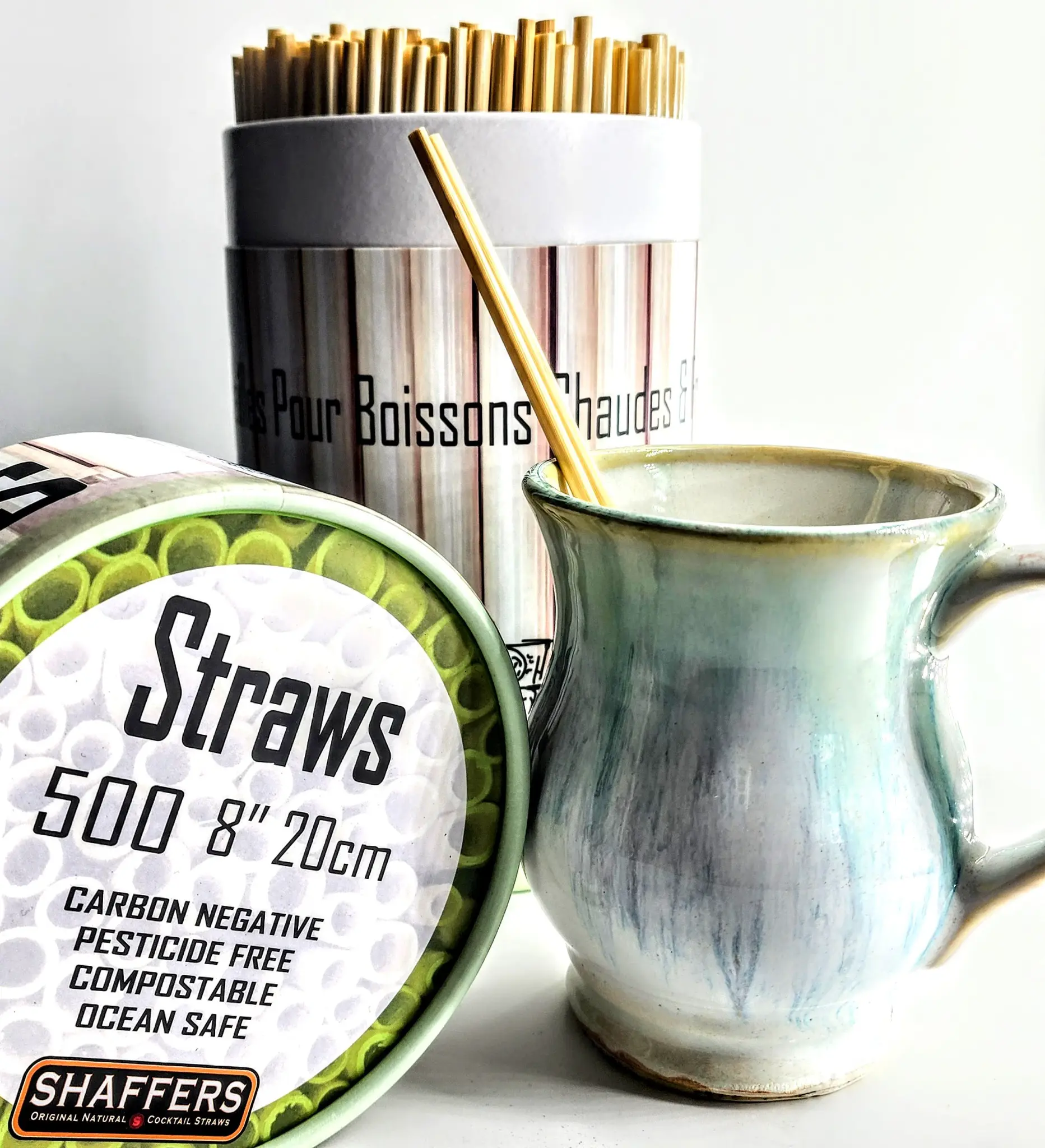
Naturally Straws are made from the hollow stem of the rye plant — specifically, the section of the stalk between the last node and the seed head. Rye has been grown in British Columbia for generations. It is a hardy, low-input crop that thrives in the province's interior climate, requires no pesticides in our growing system, and produces a stem that is naturally hollow, naturally strong, and naturally food-safe. We do not manufacture our straws. We grow them.
The product has a defined lane, and we are honest about it. Naturally Straws work for thin drinks — cocktails, coffee, iced tea, sparkling water, wine — hot or cold. They are not designed for thick smoothies or milkshakes. That honesty is, we believe, a competitive advantage. The hospitality industry has been burned by products that overpromise. We would rather own our lane completely than claim a lane we cannot hold.
Within that lane, the product performs exceptionally. The rye stem does not go soggy. It does not impart flavour. It does not collapse. It has a natural, tactile quality that guests notice — a warmth and weight that no paper or plastic straw can replicate. Several bartenders have described it as the best mouthfeel they have encountered in a straw. That is not a marketing claim. It is a consistent observation from the people who use the product daily.
We do not manufacture our straws. We grow them. That distinction is the foundation of everything we are building.
Why We Qualify for Global Markets
The question we are asked most often — by buyers, by distributors, by prospective territory reps — is some version of: "Why would a bar in Monaco or a hotel in Tokyo buy a straw from a farm in British Columbia?" It is a fair question, and it deserves a direct answer.
The premium hospitality industry — the craft cocktail bars, the luxury hotels, the Michelin-starred restaurants — has been moving for over a decade toward provenance-driven purchasing. The same instinct that led bartenders to seek out single-origin spirits, estate-grown garnishes, and locally foraged ingredients is now extending to every element of the bar experience. A straw is no longer just a straw. It is a statement about what the venue values.
Naturally Straws offers something that no factory-made alternative can: a genuine agricultural story. The rye is grown on a specific farm, in a specific valley, by a specific family. The straw in a guest's hand at a bar in Edinburgh or a resort in Costa Rica was grown in a field in British Columbia. That provenance is verifiable, communicable, and — in the markets we are targeting — genuinely valued.
The Logistics Case: Amazon FBA as Global Infrastructure
Agricultural provenance is a compelling story. But stories do not ship themselves. The practical question for any farm-grown product entering global wholesale markets is: how do you get from a field in British Columbia to a bar in Singapore, reliably, affordably, and at the volume a hospitality operator requires?
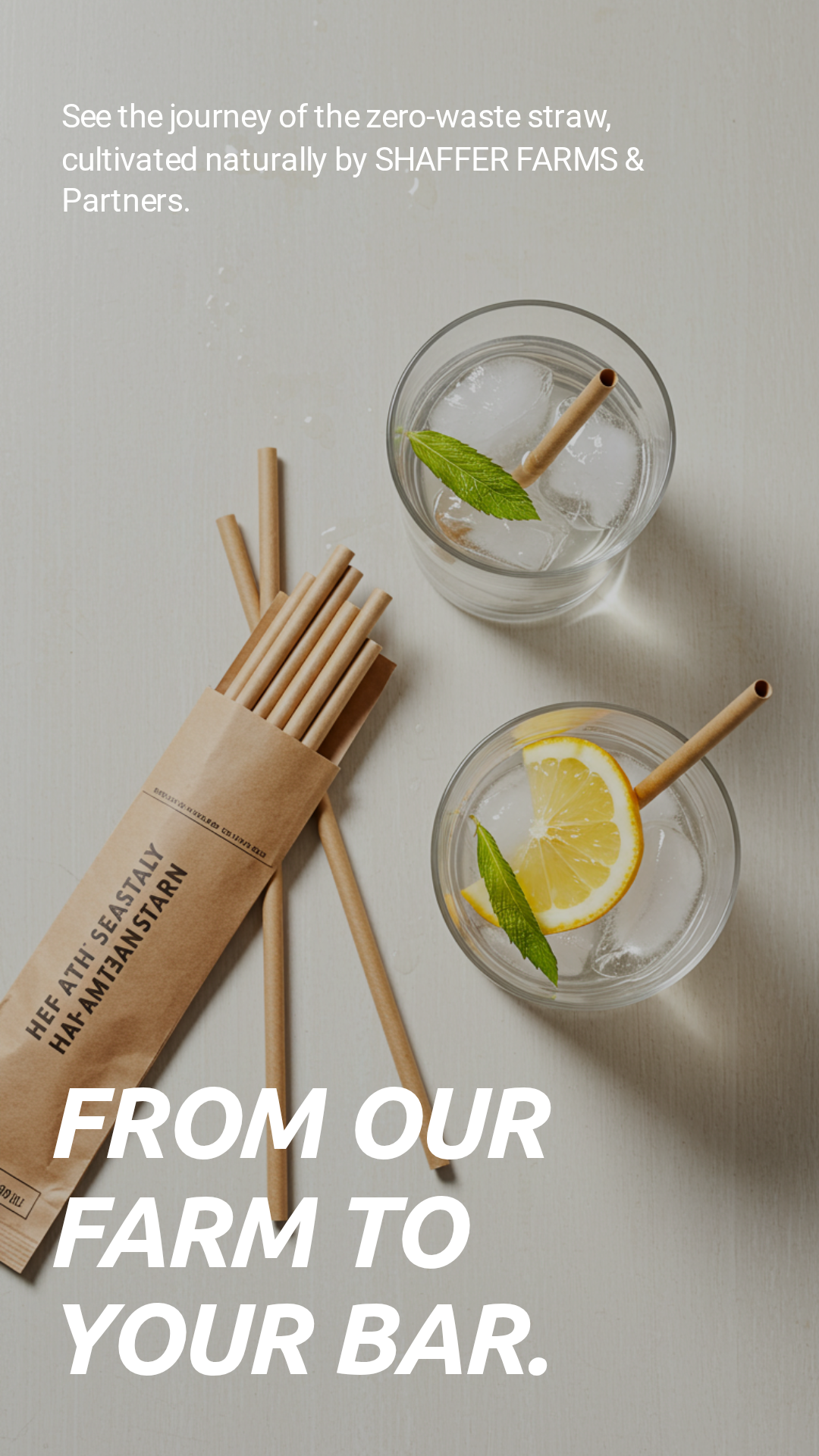
Our answer is Amazon's FBA (Fulfillment by Amazon) network — a global distribution infrastructure that, as of 2026, operates over 1,300 fulfillment centers across North America, Europe, Asia-Pacific, the Middle East, and Latin America. By positioning inventory at FBA hubs closest to our target markets — SEA5 in Seattle for the Pacific Northwest, LTN4 in Luton for the UK, NRT1 in Tokyo for Japan, SYD1 in Sydney for Australia — we can offer 1-2 day delivery to wholesale accounts in every territory we serve, without building our own distribution infrastructure.
This is not a workaround. It is a deliberate strategic choice. Amazon's fulfillment network was built to solve exactly the problem we face: getting a physical product from a point of origin to a point of sale, quickly and reliably, at global scale. The same infrastructure that delivers consumer goods to households delivers wholesale inventory to commercial buyers. We are using it the same way every other sophisticated product company uses it — as the backbone of our supply chain.
The territory structure we have built for Naturally Straws maps directly onto Amazon's fulfillment hub clusters. Each of our 27 sales territories is anchored to one or two FBA nodes. A territory rep in the Southeast United States knows that their accounts in Atlanta, Miami, and Nashville are served from ATL7 and MIA5. A rep in France knows that Paris and Lyon accounts are served from CDG7 and LYS1. The logistics are not an afterthought. They are built into the territory design from the ground up.
The same infrastructure that delivers consumer goods to households delivers wholesale inventory to commercial buyers. We are using it as the backbone of our supply chain.
The Government Alignment Argument
The March 3, 2026 AAFC announcement is relevant to Naturally Straws not because we are a food security project — we are not — but because it demonstrates the direction of federal agricultural policy. Ottawa is investing in local food infrastructure. It is funding the systems that allow Canadian farms to produce goods of genuine value, at scale, for Canadian and international markets. The Local Food Infrastructure Fund, the School Food Infrastructure Fund, the National School Food Program — these are not isolated initiatives. They are components of a coherent policy direction that recognises farm-grown goods as a strategic national asset.
Naturally Straws sits within that policy direction. We are a BC farm producing a value-added agricultural product for export to premium markets. We are not growing commodity rye for the grain elevator. We are growing rye for the bar top at The Savoy in London, the Four Seasons in Tokyo, and the craft cocktail bar on the corner in Austin. That is exactly the kind of agricultural diversification that federal policy is designed to encourage — and that the market is increasingly willing to reward.
We are currently in preparation for Canada Organic (CFIA) certification, with USDA Organic to follow. Our pesticide-free and allergen-free status is confirmed. Our compostability — home and industrial — is confirmed. Our ocean-safe credentials are confirmed. A Life Cycle Assessment to formally document our carbon-negative status is underway. These certifications are not marketing exercises. They are the credentials that open doors in the markets we are targeting — the same markets where a buyer will ask, before placing a first order, whether the product can be verified as what it claims to be.
Who We Are Looking For
We are building a global network of territory representatives — people with existing relationships in the on-trade hospitality industry who understand the craft cocktail and specialty coffee markets in their region. We are not looking for order-takers. We are looking for advocates: people who believe in the product, understand the story, and have the relationships to introduce it to the right accounts.
Each territory is exclusive. One rep per region. The territory structure is built around Amazon FBA fulfillment hubs, which means that every rep we bring on has the logistics infrastructure in place to serve their accounts from day one. We handle the supply chain. The rep handles the relationships.
Priority launch markets — Pacific Northwest, Canada West, Southern California, UK & Ireland, and Australia — are open now. The remaining North American territories are open. European, Asia-Pacific, and Americas territories are coming online as we build inventory and establish FBA positioning in each region.
If you are reading this and you work in the on-trade hospitality industry — if you sell to bars, restaurants, hotels, or specialty coffee operators — we would like to talk to you. The application process is straightforward. The territory is exclusive. The product is ready.
We are not looking for order-takers. We are looking for advocates — people who believe in the product and have the relationships to introduce it to the right accounts.
A Final Word on Qualification
The honest answer to "why do you qualify for global markets" is this: because the product is genuinely good, the story is genuinely true, and the logistics are genuinely solved. We are not a startup with a concept and a render. We are a farm with a field, a harvest, and a product that bartenders in our home market have been using and recommending for several years.
The global market for premium natural straws is not yet crowded. The window to establish a brand in this category — to be the name that bartenders in Tokyo and London and Melbourne associate with the natural straw — is open right now. We intend to walk through it.
The Government of Canada is investing $30 million in local food infrastructure because it understands that farm-grown products have a future. We agree. We are building that future, one territory at a time, from a field in British Columbia.
Take the Next Step
Interested in a territory or a wholesale account?
Contact Gerald Shaffer directly at Shaffer Farms to discuss territory availability, wholesale pricing, and the rep application process.
Source
Agriculture and Agri-Food Canada. "The Government of Canada provides support to strengthen community food security across Canada." News release, March 3, 2026. Ottawa, Ontario. Minister: The Honourable Heath MacDonald.