Farmers Growing
Eco-Ware
How one BC farm family is turning a forgotten crop into a new category — and inviting farmers across North America to join them.
Across the grain belts of British Columbia and the Canadian prairies, a quiet crisis has been building for years. Commodity grain prices have remained stubbornly flat while input costs — fuel, fertiliser, labour, equipment — have climbed steadily higher. For many family farms, the arithmetic no longer works. Margins on wheat, barley, and canola have thinned to the point where a single bad season can erase years of careful management. Farmers are not failing for lack of skill or effort. They are failing because the market for what they grow has not kept pace with the cost of growing it.
Gerald Shaffer has been watching this problem for a long time. As the founder of Shaffer Farms in British Columbia, he has spent years thinking about what a farm can grow that the world actually needs — and will pay a premium for. His answer, arrived at after considerable research into agricultural history and the modern hospitality trade, is both surprising and entirely logical: drinking straws.
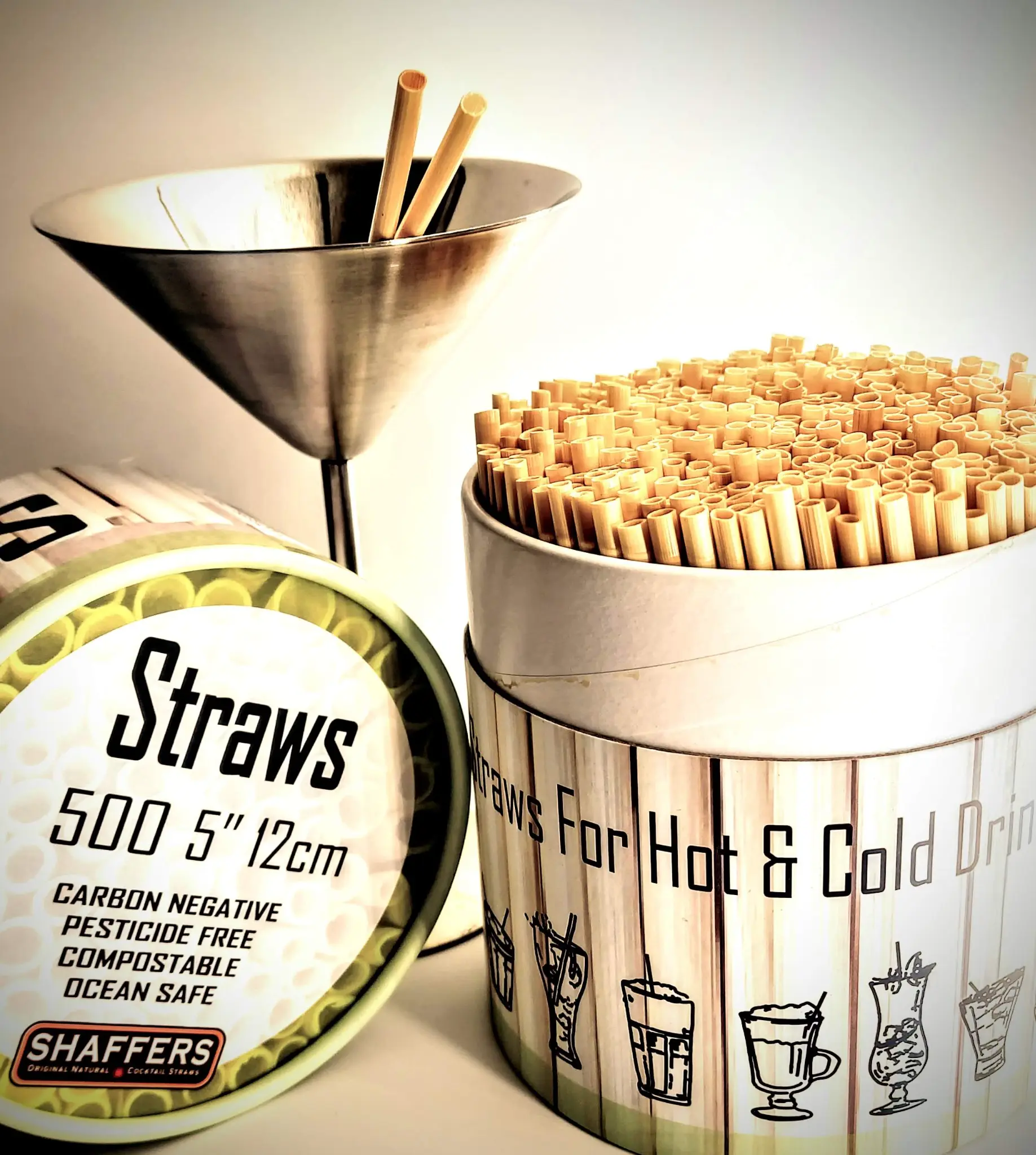
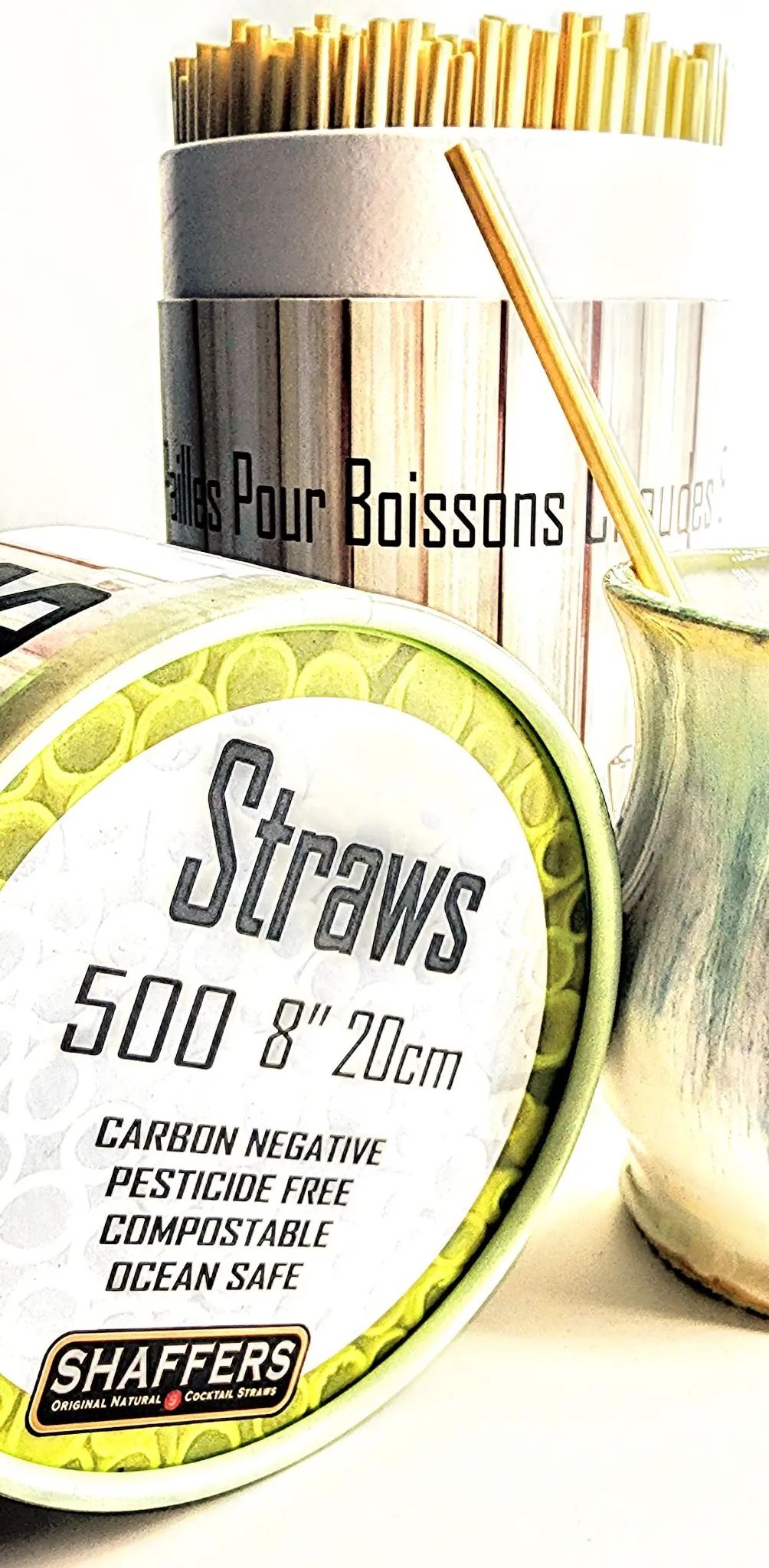
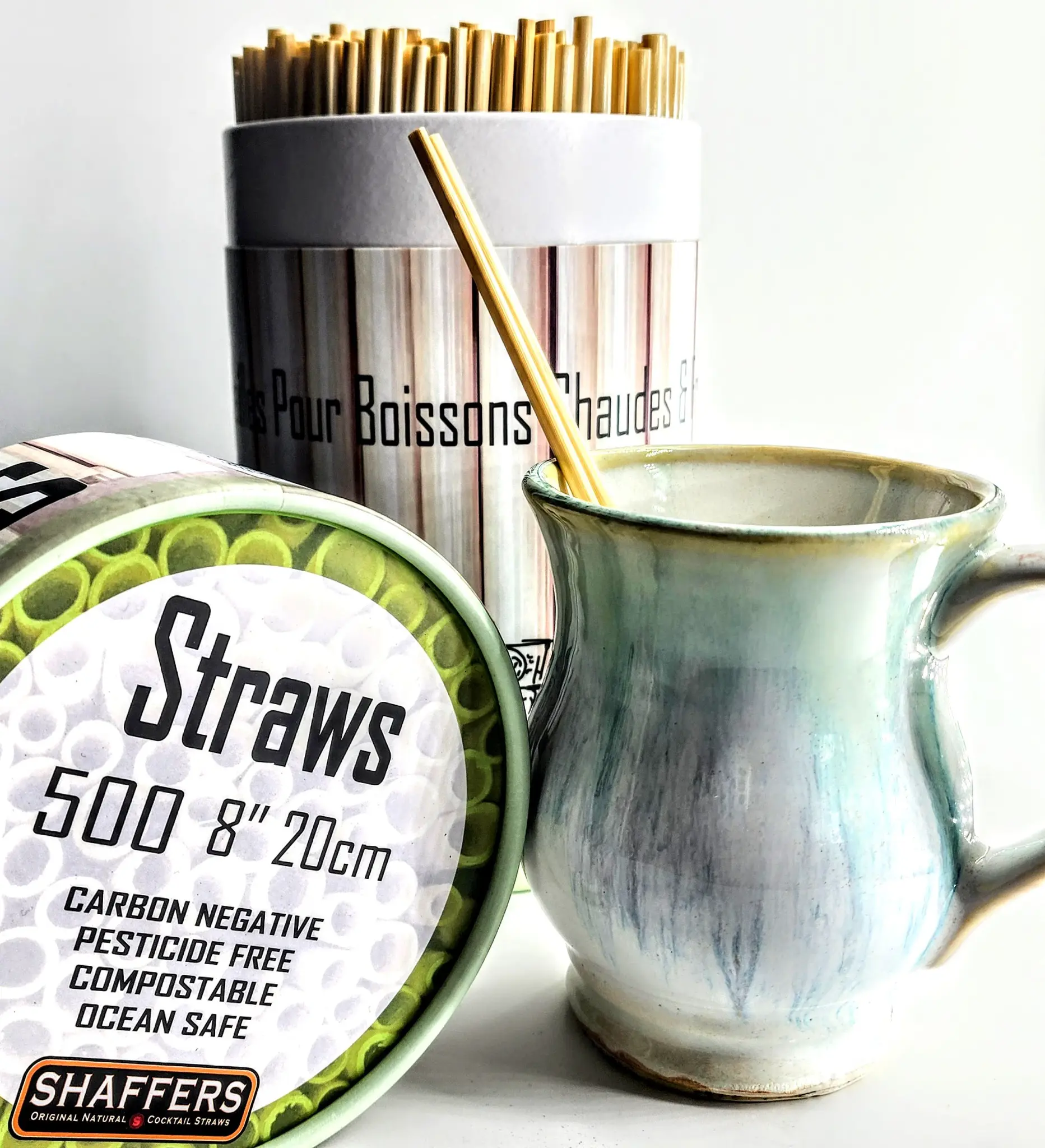
Shaffer Farms — British Columbia test plot
The Original Straw
Before 1888, every drinking straw in the world was a natural straw. Hollow grass stems — cut from rye, wheat, and other grain crops — were the universal vessel for sipping everything from Victorian cocktails to medicinal tonics. The industrial paper straw was invented in 1888 by Marvin Stone, who wound paper around a pencil and glued it together to avoid the grassy taste of the natural stem. Plastic followed in the mid-twentieth century, and the original natural straw was forgotten almost entirely.
It is now coming back — and the reasons are both environmental and cultural. The global hospitality industry has been under enormous pressure to eliminate single-use plastics, and the paper straw that replaced them has proven deeply unpopular. It goes soggy. It imparts a cardboard flavour. It collapses in hot drinks. Bartenders and baristas have been searching for something better, and the answer was growing in fields all along.
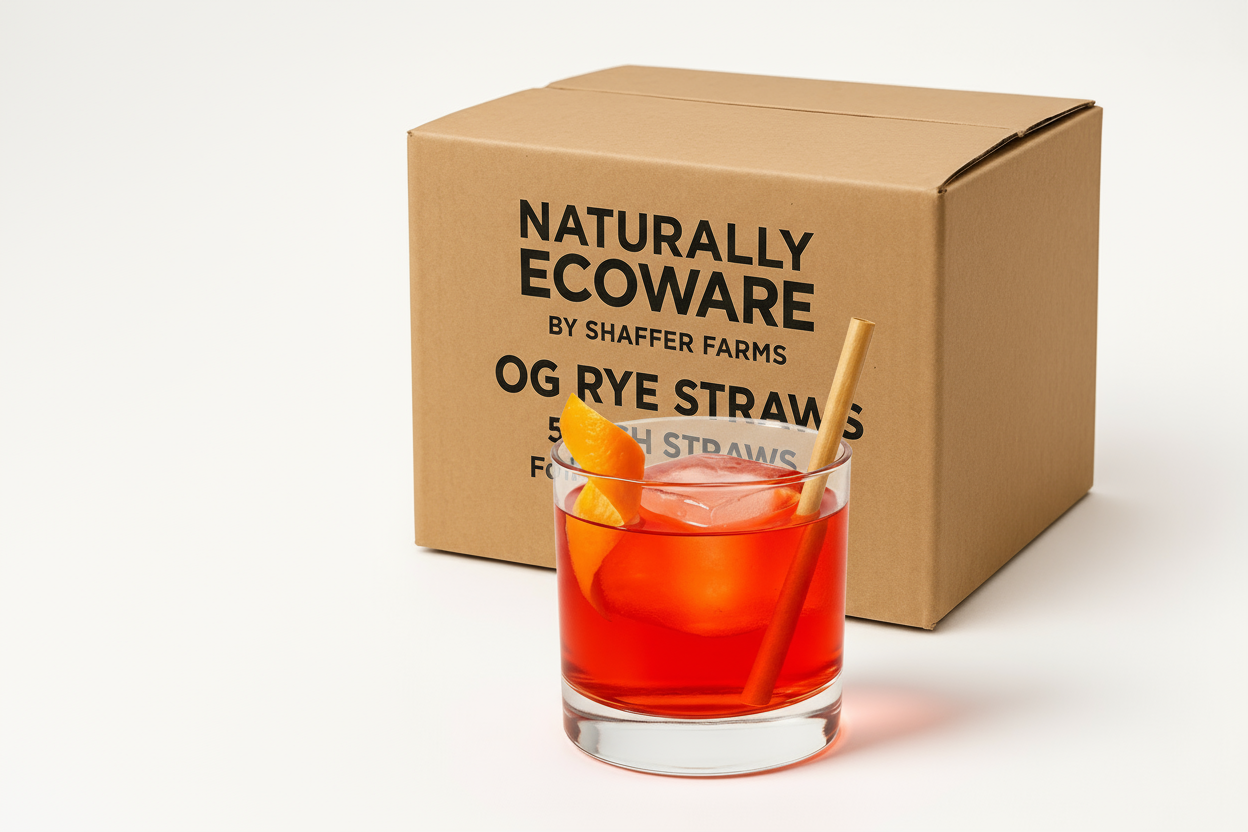
Shaffer Farms is bringing the natural straw back under the brand Naturally Straws — and doing so not as a niche novelty, but as a scalable, farm-sourced supply chain built to serve the professional hospitality trade.
"Farm-grown, not factory-made. A raw agricultural crop — grown in a field, dried in the sun, cut to length. Nothing added. Nothing left behind."
A Turnkey System for Farmers
What makes the Shaffer Farms model distinctive is not just the product — it is the system behind it. Gerald Shaffer describes it as a turnkey eco-ware growing programme: Shaffer Farms supplies the seed, provides detailed growing guidance, and — critically — guarantees purchase of the entire harvest at a premium price.
For a farmer accustomed to selling grain into a commodity market where prices are set by forces entirely beyond their control, that guaranteed purchase is transformative. There is no speculation, no storage risk, no searching for a buyer after harvest. Shaffer Farms is the buyer. The farmer grows the crop; Shaffer Farms handles everything else — grading, processing, packaging, and distribution to the hospitality trade.
The economics are compelling. Natural straw rye can be grown on the same land, with the same equipment, and in the same seasonal window as conventional grain crops. The key difference is the value at the end of the supply chain. A tonne of commodity rye sold into the grain market returns a fraction of what the same crop returns when it is processed into premium drinking straws and sold to bars, restaurants, and hotels.
The Test Plot: Proof in the Ground
Shaffer Farms is not asking farmers to take this on faith. In British Columbia, a partner farm has already planted a test plot under the Naturally Straws growing programme. The results of that trial — yield data, quality grades, agronomic performance, and economic returns — will be available by August 2026, providing the first independently verifiable evidence of the system's performance under real Canadian growing conditions.
This is the kind of rigorous, evidence-based approach that distinguishes a serious agricultural programme from a promotional concept. Shaffer Farms is not selling a dream; it is building a documented, replicable system that any farm can evaluate on its merits.
The BC test plot represents the first node in what Shaffer Farms envisions as a network of licensed growers across Canada and eventually the United States. Each farm in the network operates under the Naturally Straws growing protocol, supplying a consistent, quality-graded crop to a centralised supply chain. The brand — and the premium it commands in the hospitality market — is shared across the network, giving every participating farmer access to a market they could not reach on their own.
Eco-Ware: A New Category
Shaffer Farms is deliberate about the language it uses. The term eco-ware is not accidental. It signals that the natural straw is not merely an eco-friendly substitute for a plastic product — it is the first item in an entirely new category of farm-grown hospitality goods.
The logic is straightforward: if a hollow rye stem can replace a plastic drinking straw, what else can a farm grow that replaces a manufactured product in the hospitality, food service, or retail trade? Stirrers. Cocktail picks. Skewers. Packaging inserts. The natural material that has been displaced by plastic and paper across the entire food and beverage industry is, in most cases, a crop that a farmer can grow. Naturally Straws is the proof of concept for a much larger idea.
"We Grow Eco-Ware" — not a product claim. A category declaration.
What This Means for Farmers
For any farm operator considering the Naturally Straws growing programme, the proposition is worth examining carefully. Shaffer Farms provides guaranteed purchase of the entire harvest at a pre-agreed premium price — no commodity market exposure, no price risk after planting. The correct rye seed variety, selected for hollow stem characteristics and consistent bore diameter, is supplied directly. A detailed growing protocol covers soil preparation, seeding rates, irrigation, pest management, harvest timing, and post-harvest drying.
Every farm in the network is a Naturally Straws Grower — a designation that carries its own value as the brand grows in the hospitality trade and in the broader eco-ware category. Results from the BC test plot, available in August 2026, will further refine the growing recommendations with local agronomic evidence.
The Bigger Picture
The natural straw is a small product with a large story behind it. It is a story about what happens when industrial convenience displaces agricultural wisdom — and what becomes possible when someone decides to reverse that displacement. It is a story about farmers finding a crop that pays, about bartenders finding a straw that works, and about a supply chain that is genuinely carbon negative from field to glass.
Shaffer Farms is at the beginning of that story. The BC test plot is the first chapter. The results in August 2026 will be the first evidence. And the farms that join the Naturally Straws growing network in the years ahead will be the ones who recognised early that eco-ware is not a trend — it is a return to something that was always there, growing in the field, waiting to be taken seriously again.
Get Involved
Farmers interested in the Naturally Straws growing programme are invited to make direct contact with Gerald Shaffer at Shaffer Farms. Results from the BC test plot will be published at naturallystraws.com in August 2026.
Contact Gerald Shaffer© 2026 Naturally Straws · Shaffer Farms · British Columbia, Canada
[email protected]