Compostable vs Biodegradable: What the Labels Actually Mean
"Compostable" and "biodegradable" are not the same thing. The hospitality industry has been misled by both labels for years. Here is what they actually mean — and why it matters for your sustainability claims.
Biodegradable: The Weakest Claim
"Biodegradable" means that a material will eventually break down through biological processes. The key word is "eventually." Almost everything is biodegradable given enough time — including plastic, which biodegrades over hundreds or thousands of years.
A product labelled "biodegradable" may take decades to break down. It may require specific conditions — temperature, humidity, microbial activity — that do not exist in a landfill or ocean environment. And it may fragment into microplastics before it fully degrades.
"Biodegradable" without qualification is effectively a meaningless claim.
Compostable: A Stronger Standard
"Compostable" is a more specific claim. A compostable product breaks down into non-toxic components within a defined timeframe — typically 90 days in a commercial composting environment. The breakdown products must not harm the compost or the plants grown in it.
The key distinction is between industrial compostable and home compostable. Industrial compostable products require the high temperatures (55–60°C) of a commercial composting facility. Many "compostable" products — including most compostable cups and many compostable straws — will not break down in a home compost bin.
The BPI (Biodegradable Products Institute) certification in North America and the TÜV Austria OK Compost certification in Europe are the most credible third-party verifications of compostability claims.
The Paper Straw Compostability Problem
Most paper straws are labelled "compostable" but are not accepted in commercial composting facilities. The reason: the coatings and adhesives used to make paper straws water-resistant are often not compostable. Some contain PFAS — synthetic chemicals that do not break down in composting conditions.
A 2023 study found PFAS in 18 of 20 paper straw brands. These chemicals persist in the environment indefinitely. A paper straw labelled "compostable" may be introducing persistent synthetic chemicals into your compost stream.
What a Natural Grass Straw Actually Does
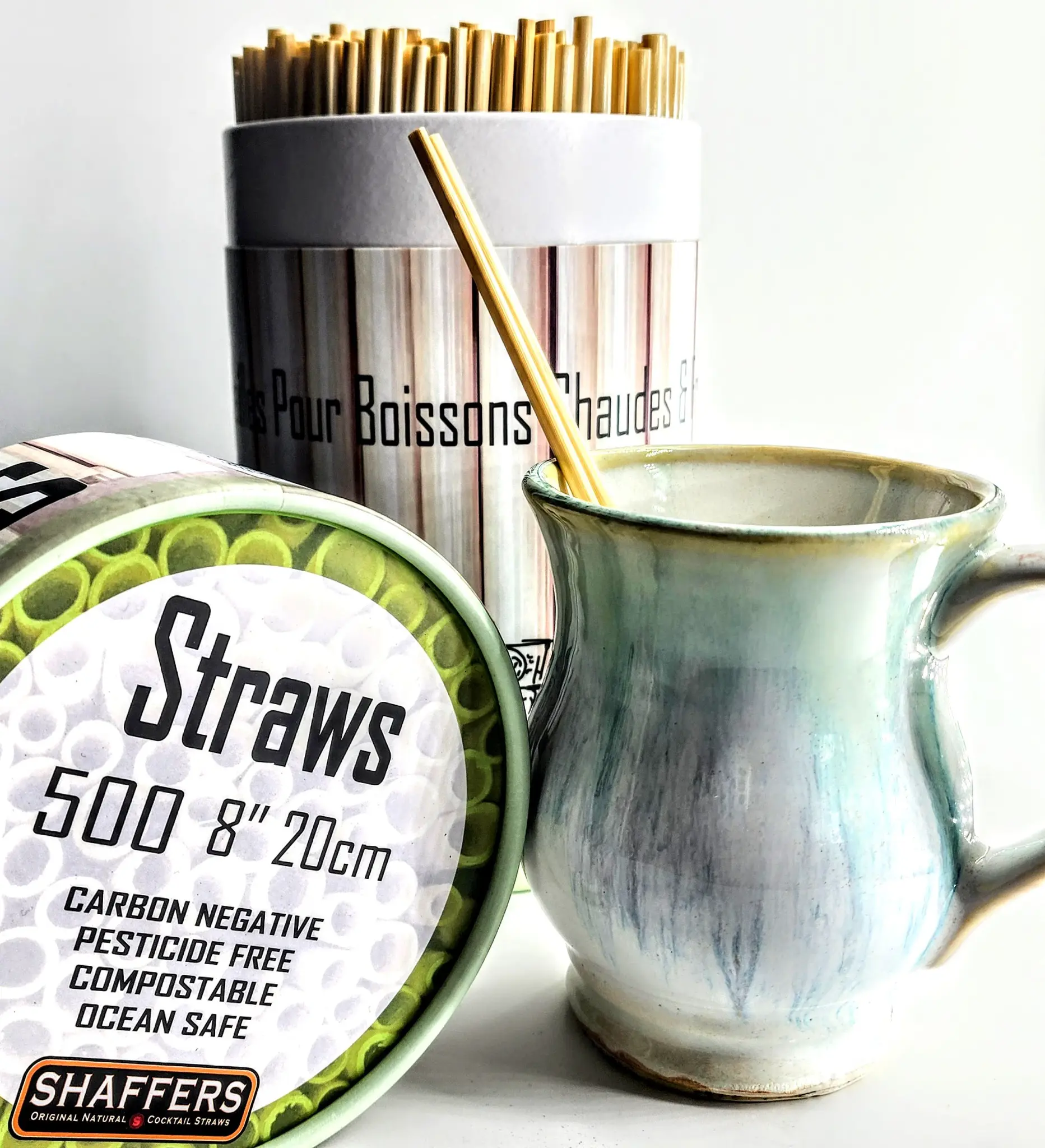
A natural hollow grass straw — one ingredient, no additives, no coatings — is genuinely compostable in both industrial and home composting conditions. It is also genuinely biodegradable in a meaningful timeframe. A grass stem in a compost bin breaks down in weeks.
There are no coatings to prevent breakdown. There are no synthetic materials to persist. There are no PFAS. The straw is a plant. It breaks down like a plant.
| Straw Type | Biodegradable? | Home Compostable? | PFAS Risk? |
|---|---|---|---|
| Plastic | No (centuries) | No | No |
| Paper (coated) | Partial | Often no | Yes — common |
| Bamboo | Yes | Yes | No |
| PLA (bioplastic) | Industrial only | No | No |
| Natural grass stem | Yes — weeks | Yes | No |
What This Means for Your Sustainability Claims
If you are a hospitality operator making sustainability claims about your straws, the label matters. "Compostable" paper straws may not be accepted in your commercial composting facility. "Biodegradable" claims without qualification are legally and ethically questionable in many jurisdictions.
A natural grass straw gives you the cleanest, most defensible claim: one ingredient, no additives, home and commercially compostable, no PFAS, no synthetic materials. It is the only straw where the sustainability claim is simply true.
One ingredient. Genuinely compostable. Nothing to hide.